
Verification
Qualify the supply route.
Review ENGIC’s current ISO certificates and published standards, or request project-specific documentation and representation confirmation during a qualified enquiry.
Engineered Valves
Valve solutions for demanding flow, pressure, and isolation requirements
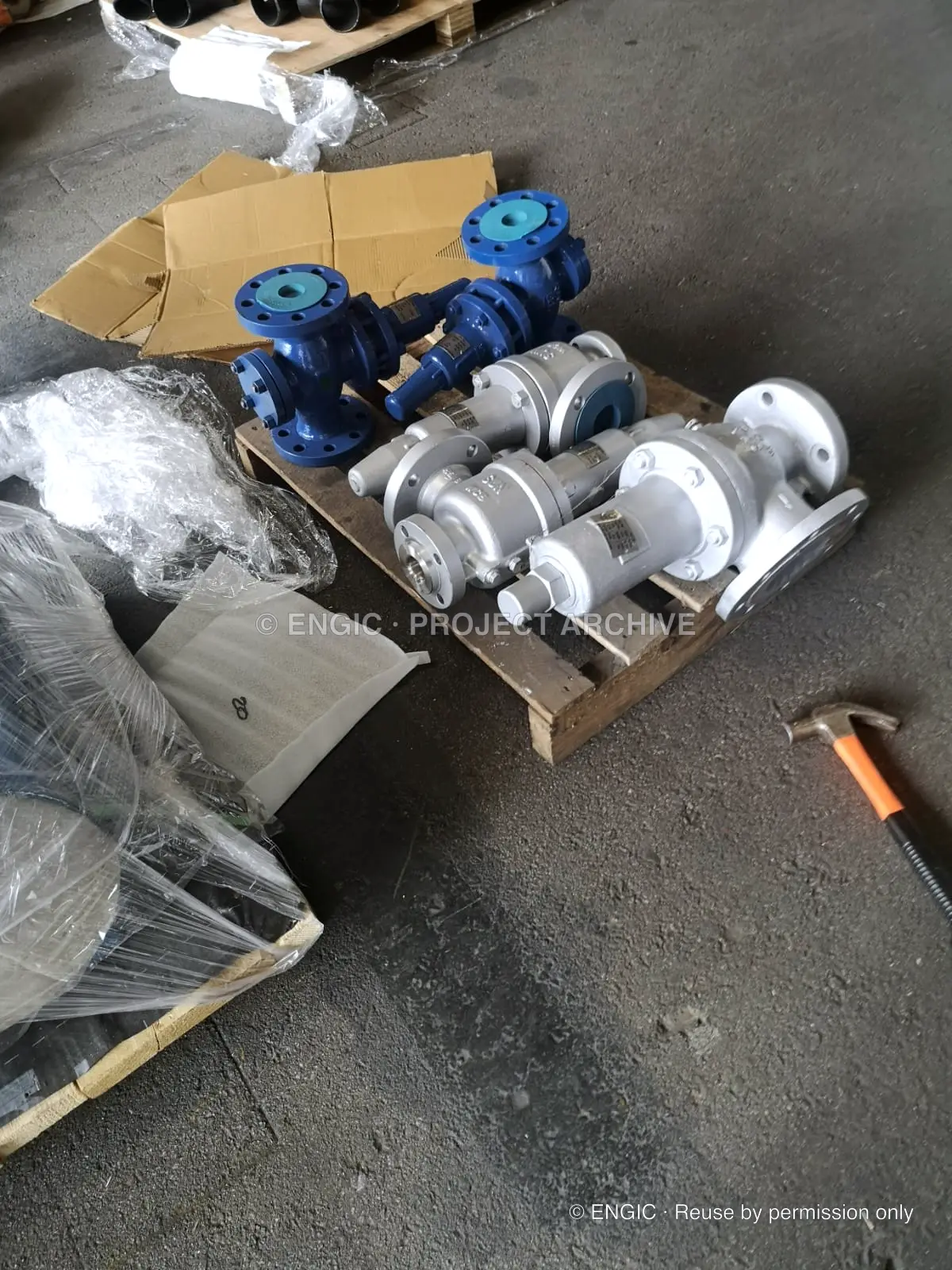
ENGIC supplies engineered valves for oil and gas, offshore, energy, utilities, process plants, water, infrastructure, marine, and industrial applications.
Our valve portfolio supports isolation, flow control, pressure containment, pressure relief, shutdown, throttling, corrosive service, cryogenic service, high-temperature service, and specialist operating conditions.
Products are selected according to service medium, operating pressure, temperature, material compatibility, trim requirements, end connection, actuation requirement, inspection level, documentation requirement, and applicable project standard.
ENGIC supports clients with valve selection, technical clarification, specification review, supplier coordination, inspection support, documentation control, and delivery follow-up.
Valve types may include:
Application-specific configurations may include:
Common pressure classes may include:
Common material options may include:
Common end connections may include:
Standards may include:
The technical envelope ENGIC has supplied against:
GATE
Gate
Wedge lifts clear of the bore, so a fully open gate valve has no obstruction and almost no pressure drop. Isolation duty only — throttling wire-draws the seat.
API 600 process, API 6D pipeline
GLOBE
Globe
Flow turns up through a stationary seat and back down. That deliberate resistance is what makes the valve regulate, and why it is specified where flow must be set rather than merely stopped.
BS 1873 / API 623
BALL
Ball
Quarter turn from shut to full bore. Seats wipe as the ball rotates, which is why it holds bubble-tight shutoff far longer than a multi-turn valve on dirty service.
API 6D / API 608
CHECK
Swing check
No operator at all — line pressure holds the disc open and reverse flow slams it shut. Fitted to protect pumps and compressors from backflow on trip.
API 6D / API 594
BFLY
Butterfly
Disc stays in the flow, so there is always some loss, but face-to-face is short and weight is a fraction of a gate valve. The default above about 8 in on water and low-pressure service.
API 609 / AWWA C504
Review ENGIC’s current ISO certificates and published standards, or request project-specific documentation and representation confirmation during a qualified enquiry.
ENGIC supplies actuator and valve automation packages for manual, on-off, modulating, fail-safe, throttling, direct gas, high-pressure, and emergency shutdown applications.
03ENGIC supplies standard, special, forged, heavy-wall, high-yield, alloy, and custom pipe fittings for engineered piping systems across energy, offshore, utility, infrastructure, marine, and industrial projects.
04ENGIC supplies standard and specialty piping flanges, including weld neck, slip-on, blind, socket weld, threaded, orifice, anchor, compact, swivel ring, spectacle blind, spade, spacer, and custom flange solutions.