Skip to content
ENGIC
Trading Division · Technical supply

Technical supply coordination for project-specific industrial requirements.

Through the Trading Division, ENGIC coordinates qualified external manufacturers and suppliers for the wider material portfolio. Separately, our Manufacturing Division produces flanges and pipe fittings in-house.

In industrial and EPCM environments, manufacturing is rarely just about producing an item. The requirement may involve drawings, datasheets, material grades, pressure ratings, dimensional standards, coatings, testing, inspection hold points, documentation packages, and delivery schedules.

ENGIC helps clients coordinate these requirements across manufacturers, mills, suppliers, subcontractors, inspection agencies, logistics providers, and project teams.

Our role is to connect technical requirements with capable supply routes, while supporting documentation control, inspection readiness, supplier communication, and project-aligned delivery.
Project-specific requirements

More than catalogue supply. Project-specific coordination.

ENGIC supports clients where the requirement is more complex than a catalogue item.

A project may require a flange with specific material certification, a fitting manufactured to drawing, a structural steel package with traceability, a valve package with inspection requirements, a tubular package aligned to international standards, or a custom item requiring manufacturer clarification before quotation.

ENGIC coordinates the technical and supply path needed to move from requirement to deliverable.

This includes reviewing specifications, clarifying standards, coordinating manufacturers, supporting inspection and documentation, and following up delivery.

What we support

The Trading Division coordinates technical supply across:

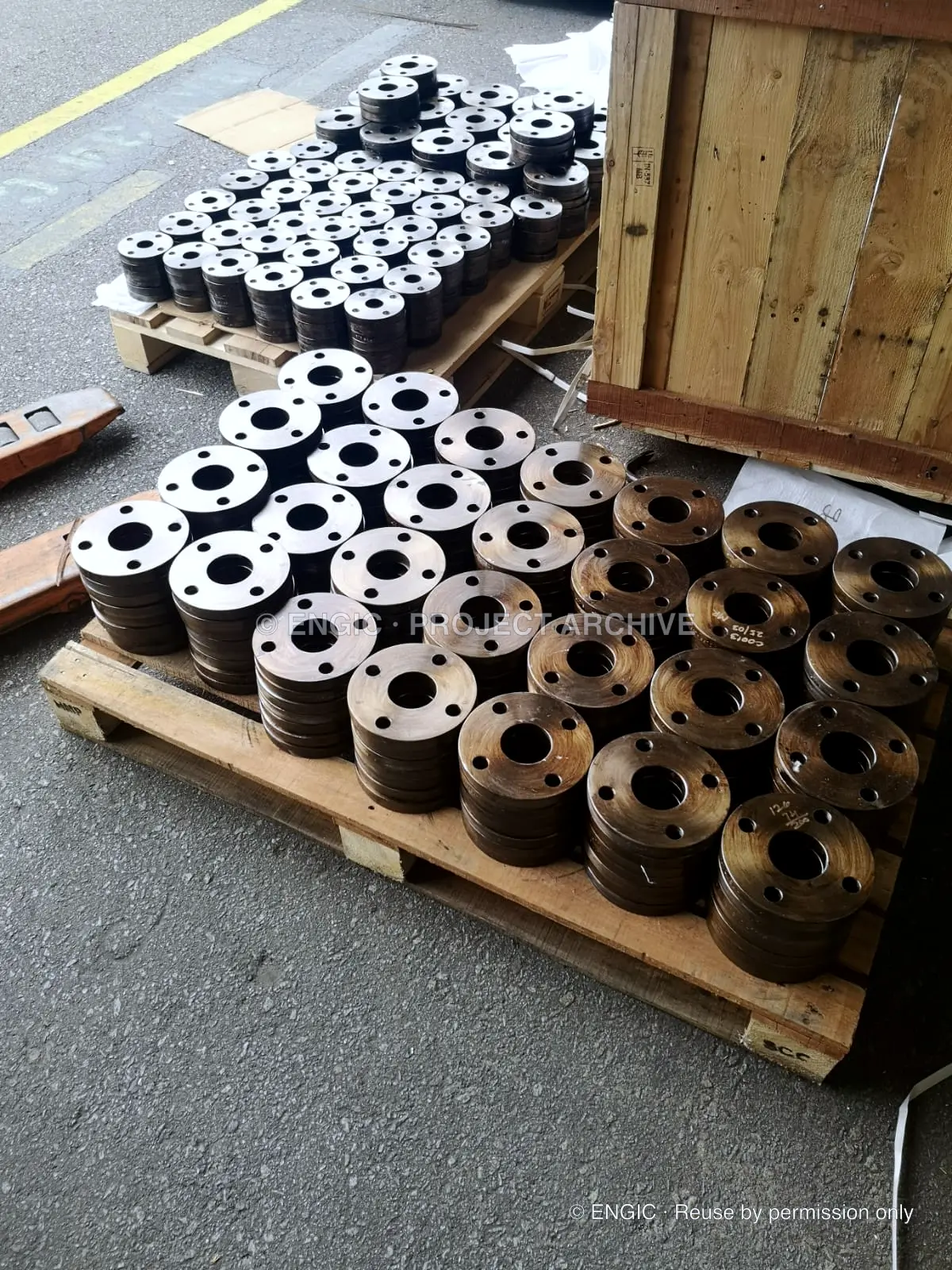
Small flanges in graduated sizes set out in rows across a timber pallet in the yard
  • 01Flanges
  • 02Pipe fittings
  • 03Engineered valves
  • 04Valve actuators
  • 05OCTG
  • 06Energy tubulars
  • 07Standard tubulars
  • 08Structural steel
  • 09Electrical conduits
  • 10Special and custom products
  • 11Project-specific fabricated items
  • 12Industrial components
  • 13Engineered supply packages
  • 14Multi-standard product packages
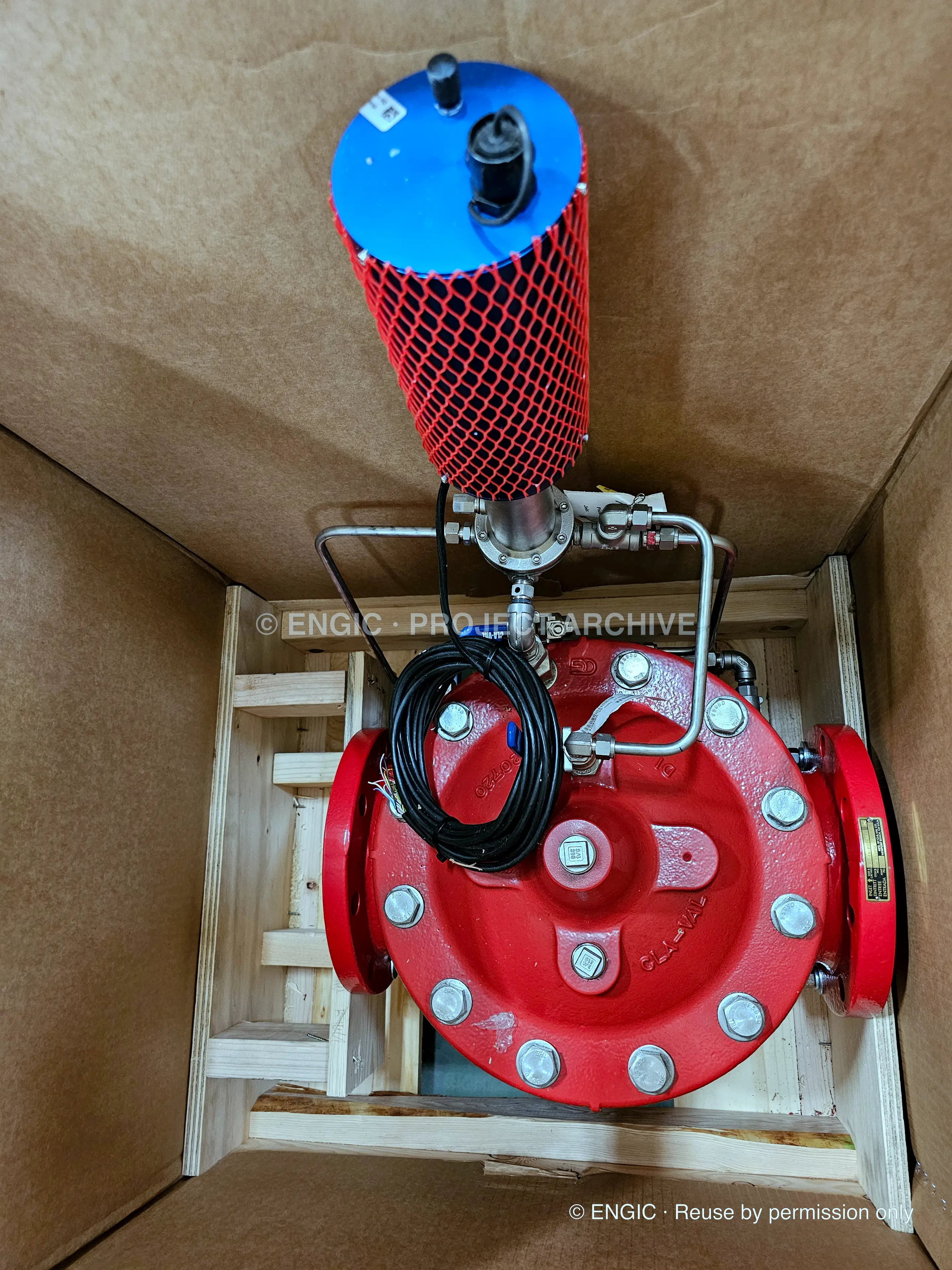
Trading Division supply: an actuated valve assembly crated and braced for despatch. ENGIC does not manufacture valves or actuators.
Eight capability areas

From requirement to delivered package.

  1. 01

    Manufacturing Route Coordination

    Matching technical requirements with capable manufacturing routes through qualified manufacturers, mills, suppliers, and subcontractors.

    Read more →

  2. 02

    Drawing, Datasheet & Specification Review

    Clarifying the requirement before production or procurement — RFQs, MTOs, drawings, datasheets, schedules.

    Read more →

  3. 03

    Custom & Special Product Coordination

    Drawings, special dimensions, unusual material grades, large-diameter sizes, coatings, special testing, and project-specific documentation.

    Read more →

  4. 04

    Multi-Standard Manufacturing Support

    Manufacturing coordination across API, ASME, ASTM, EN, DIN, ISO, NORSOK, DNV, NACE, JIS, GOST, and client-specific requirements.

    Read more →

  5. 05

    Material & Grade Coordination

    Carbon steel, low-temp carbon, stainless, duplex, super duplex, alloys, nickel alloys, copper nickel, titanium, and non-metallic options.

    Read more →

  6. 06

    Inspection, Testing & Documentation Coordination

    MTCs, EN 10204 3.1/3.2, ITPs, NDT, hydrotest, PMI, dimensional, coating, heat treatment, traceability, vendor data books.

    Read more →

  7. 07

    Supplier, Manufacturer & Subcontractor Follow-Up

    Active coordination across manufacturers, mills, suppliers, subcontractors, inspection agencies, and logistics providers.

    Read more →

  8. 08

    Expediting, Logistics & Delivery Coordination

    Packing, shipping, freight, warehousing, backload handling, quay checks, delivery status, and site delivery coordination.

    Read more →

01

Manufacturing Route Coordination

Matching technical requirements with capable manufacturing routes.

Project-specific supply requires the right manufacturing route. The manufacturer must understand the product type, applicable standard, material requirement, testing scope, documentation package, and delivery expectation.

ENGIC supports clients by coordinating with qualified manufacturers, mills, suppliers, and subcontractors to identify practical supply routes for the requirement.

This helps reduce technical mismatch, quotation delays, documentation problems, and supplier execution risk.

Manufacturing route coordination may include:

  • →Manufacturer identification
  • →Mill and supplier coordination
  • →Manufacturing capability review
  • →Material availability check
  • →Standards alignment
  • →Product feasibility review
  • →Special item coordination
  • →Custom product coordination
  • →Approved vendor list alignment
  • →Alternative manufacturer review
  • →Lead time review
  • →Commercial feasibility check
  • →Delivery route consideration

Outcome

A clearer manufacturing or supply route aligned with the product requirement, project specification, and delivery expectations.

02

Drawing, Datasheet & Specification Review

Clarifying the requirement before production or procurement.

Unclear specifications create cost, delay, rework, and delivery risk.

ENGIC reviews available technical documents to help identify the product requirement, applicable standard, material grade, pressure class, dimensional requirement, inspection scope, documentation needs, and missing information.

This review supports better manufacturer communication and stronger quotation accuracy.

Documents reviewed may include:

  • →RFQs
  • →MTOs
  • →Drawings
  • →Datasheets
  • →Product schedules
  • →Valve schedules
  • →Piping classes
  • →Bill of Materials
  • →Technical specifications
  • →Approved vendor lists
  • →Inspection requirements
  • →Project standards
  • →Client-specific requirements

Review areas may include:

  • →Product type
  • →Material grade
  • →Pressure class
  • →Size and dimensions
  • →Wall thickness
  • →End connection
  • →Face type
  • →Coating or lining requirement
  • →Heat treatment requirement
  • →NDE / NDT requirement
  • →Hydrotest requirement
  • →PMI requirement
  • →Sour service requirement
  • →Classification requirement
  • →Documentation package requirement
  • →Delivery requirement

Outcome

A better-defined technical requirement ready for manufacturing coordination, supplier clarification, quotation, or procurement execution.

03

Custom & Special Product Coordination

Supporting non-standard and project-specific requirements.

Not every project requirement fits a standard catalogue item.

ENGIC supports clients with custom and special product coordination where the requirement involves drawings, special dimensions, unusual material grades, high-pressure ratings, large-diameter sizes, coatings, linings, special testing, or project-specific documentation.

We coordinate with suitable manufacturing and supply routes to assess feasibility, clarify requirements, support quotation, and manage the path to delivery.

Custom and special products may include:

  • →Special flanges
  • →Custom flanges
  • →Compact flanges
  • →Anchor flanges
  • →Orifice flanges
  • →Swivel ring flanges
  • →Spectacle blinds
  • →Spades and spacers
  • →Heavy-wall fittings
  • →High-yield fittings
  • →Special alloy fittings
  • →Barred tees
  • →Special flow tees
  • →Split tees
  • →Y-pieces
  • →Headers
  • →Extruded manifolds
  • →Fittings manufactured to client drawings
  • →Structural steel packages
  • →Project-specific fabricated items
  • →Coated or lined products
  • →Special tubular requirements

Outcome

A controlled path for non-standard requirements, from technical review and manufacturer clarification to inspection, documentation, and delivery follow-up.

04

Multi-Standard Manufacturing Support

Manufacturing coordination across global project standards.

Engineering projects often involve multiple standards within a single package. A flange may be ASME-based with ASTM material requirements, EN documentation expectations, NACE sour service requirements, and client-specific inspection rules. A structural package may involve EN or ASTM materials, offshore classification requirements, coating requirements, and traceability records.

ENGIC helps clients manage this complexity by coordinating manufacturing and supply requirements according to the applicable standards and project specifications.

Standards may include:

  • →API
  • →ASME / ANSI
  • →ASTM
  • →MSS
  • →AWWA
  • →EN
  • →DIN
  • →BS
  • →ISO
  • →IEC
  • →NORSOK
  • →DNV
  • →ABS
  • →Lloyd's Register
  • →Bureau Veritas
  • →RINA
  • →JIS
  • →JPI
  • →GOST
  • →TR CU / EAC
  • →KS
  • →GB
  • →NACE / ISO 15156
  • →NACE MR0103
  • →Client-specific and project-specific standards

Support may include:

  • →Applicable standard clarification
  • →Product standard review
  • →Material standard alignment
  • →Dimensional standard alignment
  • →Pressure rating review
  • →Inspection scope coordination
  • →Documentation requirement review
  • →Certification requirement clarification
  • →Manufacturer capability confirmation
  • →Client specification alignment

Outcome

Better alignment between manufacturing capability, applicable standards, inspection requirements, and project documentation.

05

Material & Grade Coordination

Material suitability for the application.

Material selection affects strength, corrosion resistance, pressure performance, temperature suitability, weldability, sour service compatibility, lifecycle cost, and inspection requirements.

ENGIC supports coordination of material and grade requirements with manufacturers and suppliers to help align the product with the project specification and operating environment.

Material options may include:

  • →Carbon steel
  • →Low-temperature carbon steel
  • →High-yield carbon steel
  • →Forged steel
  • →Cast steel
  • →Stainless steel
  • →Duplex stainless steel
  • →Super duplex stainless steel
  • →Alloy steel
  • →Chrome alloys
  • →Nickel alloys
  • →Inconel
  • →Incoloy
  • →Monel
  • →Copper nickel
  • →Hastelloy
  • →Titanium
  • →PP, PTFE, PVC, CPVC, UPVC, PVDF, and lined materials where applicable
  • →Project-specific material grades

Material coordination may include:

  • →Material grade clarification
  • →MTC requirement coordination
  • →Heat number traceability
  • →PMI requirement coordination
  • →Sour service review
  • →Corrosion requirement review
  • →Low-temperature requirement review
  • →Heat treatment requirement review
  • →Coating or lining requirement review

Outcome

Clearer alignment between material selection, manufacturer capability, product requirement, and project operating conditions.

06

Inspection, Testing & Documentation Coordination

Documentation and inspection built into the supply process.

For manufactured and project-specific products, documentation and inspection must be considered from the start.

ENGIC supports clients by coordinating inspection requirements, testing records, certificates, traceability documents, manufacturer data, and project-specific documentation packages.

This helps reduce delays during inspection, final release, delivery, installation, commissioning, and handover.

Documentation may include:

  • →Material Test Certificates
  • →EN 10204 3.1 / 3.2 inspection certificates
  • →Certificates of Conformity
  • →Manufacturer data books
  • →Vendor data books
  • →Inspection and Test Plans
  • →Quality plans
  • →Welding documentation
  • →NDE / NDT reports
  • →Hydrotest reports
  • →Pressure test certificates
  • →PMI reports
  • →Hardness test reports
  • →Impact test reports
  • →Chemical and mechanical test reports
  • →Heat treatment records
  • →Dimensional inspection reports
  • →Coating and lining reports
  • →Galvanising reports
  • →Traceability records
  • →Packing lists
  • →Shipping documents
  • →Project-specific vendor documentation

Inspection and testing may include:

  • →Visual inspection
  • →Dimensional inspection
  • →Material verification
  • →Hydrostatic testing
  • →Pneumatic testing where applicable
  • →NDE / NDT
  • →Visible dye penetrant testing — DPT / LPI
  • →PMI
  • →Hardness testing
  • →Impact testing
  • →Coating inspection
  • →Coating thickness and adhesion testing
  • →Welding inspection
  • →Witness inspection
  • →Hold point coordination
  • →Third-party inspection coordination
  • →Final release support

Outcome

Improved inspection readiness, stronger documentation control, clearer traceability, and better project acceptance support.

07

Supplier, Manufacturer & Subcontractor Follow-Up

Keeping the supply route aligned.

Manufacturing and technical supply packages often involve several parties. Without active coordination, delays can arise from unclear requirements, missing documents, late inspections, unanswered technical queries, manufacturing changes, or logistics issues.

ENGIC supports follow-up across the supply chain to maintain visibility and reduce execution risk.

Follow-up may include:

  • →Technical clarification follow-up
  • →Quotation follow-up
  • →Manufacturer response coordination
  • →Supplier schedule monitoring
  • →Manufacturing progress follow-up
  • →Inspection readiness follow-up
  • →Documentation readiness follow-up
  • →Non-conformance follow-up
  • →Delivery schedule review
  • →Logistics coordination
  • →Issue escalation
  • →Closeout support

Outcome

Better visibility across manufacturer progress, supplier response, inspection status, documentation readiness, and delivery risk.

08

Expediting, Logistics & Delivery Coordination

Moving manufactured products from source to destination.

Manufacturing completion is not the end of the supply process. Packing, documentation, inspection release, freight coordination, customs, warehousing, and delivery all affect whether the product reaches the client when needed.

ENGIC supports delivery coordination for project-specific and manufactured supply packages.

Delivery coordination may include:

  • →Manufacturing schedule follow-up
  • →Inspection release follow-up
  • →Packing coordination
  • →Shipping documentation
  • →Freight follow-up
  • →Logistics provider coordination
  • →Warehousing support
  • →Backload handling
  • →Quay checks where applicable
  • →Delivery status reporting
  • →Delay escalation
  • →Site delivery coordination where applicable

Outcome

Stronger delivery visibility and better coordination between manufacturer, supplier, logistics provider, and client.

Product areas supported

Product families coordinated through ENGIC.

Flanges

ENGIC supports standard and special flange requirements, including weld neck, slip-on, blind, socket weld, threaded, lap joint, long weld neck, reducing, expander, orifice, anchor, compact, swivel ring, spectacle blind, spade, spacer, forged nozzle, drip ring, and custom flange requirements.

Fittings

ENGIC supports standard, special, forged, heavy-wall, high-yield, alloy, and custom fittings, including elbows, tees, reducers, caps, crosses, laterals, branch connections, barred tees, split tees, Y-pieces, headers, manifolds, and fittings manufactured to drawings.

Valves & Actuators

ENGIC supports engineered valve and actuator package coordination, including isolation, control, shutdown, safety, pressure, cryogenic, high-temperature, corrosive service, and actuated package requirements.

Tubular Products

ENGIC supports OCTG, energy tubulars, line pipe, standard tubulars, structural pipe, seamless pipe, welded pipe, coated pipe, and project-specific tubular requirements.

Structural Steel

ENGIC supports structural steel requirements, including plates, beams, H-piles, channels, structural pipe, offshore structural tubulars, combi-wall systems, tubular sheet pile, and project-specific structural materials.

Electrical Conduits

ENGIC supports rigid conduit, IMC, EMT, ERW conduit products, hot-dip galvanised conduit, inline galvanised conduit, and conduit-related project requirements.

Special & Custom Products

ENGIC supports project-specific industrial supply requirements where technical clarification, drawings, manufacturer coordination, inspection, and documentation are required.

When clients use this capability

Clients may need ENGIC's manufacturing and technical supply coordination when:

  • →A product is not readily available from standard stock
  • →A drawing-based item is required
  • →The project has strict documentation requirements
  • →Multiple standards apply to one package
  • →The approved vendor list is restrictive
  • →Lead time is critical
  • →The product requires inspection or third-party witness
  • →The item requires special material, coating, testing, or traceability
  • →A supplier response needs technical clarification
  • →The project requires alternatives without compromising compliance
  • →A package must be coordinated across several manufacturers or suppliers
Important note

Manufacturing and technical supply coordination is subject to product type, project specification, applicable standards, material availability, manufacturer capability, inspection scope, documentation requirements, regulatory requirements, commercial confirmation, and delivery feasibility.

ENGIC does not claim that every product can be manufactured, supplied, certified, inspected, or delivered in every configuration or jurisdiction. Requirements must be confirmed against the specific product, manufacturer, standard, project specification, and end-use application.

Need a manufactured or project-specific supply package?

Need a manufactured or project-specific supply package?

Share your drawing, datasheet, MTO, RFQ, material grade, pressure class, standard, inspection requirement, documentation requirement, or delivery schedule. ENGIC can support technical clarification, manufacturing route coordination, supplier follow-up, inspection documentation, and project-aligned delivery.